My first rental kitchen had exactly one usable drawer, a single narrow cabinet, and roughly the counter space of a cutting board. I stood there on move-in day holding a box of pans with genuinely nowhere to put them, and that is when I learned that small rental kitchen organization is less about square footage and more about strategy.
The frustrating part is that most kitchen storage advice assumes you can drill, screw, or install things a landlord would never allow. This guide is different: every idea for small rental kitchen organization here is fully reversible, damage-free, and leaves your deposit untouched. No screws, no anchors, no holes, just smart use of the space you already have.
Start with a ruthless edit
Before you buy a single organizer, empty the kitchen and sort everything. Good small rental kitchen organization begins by getting rid of the duplicate spatulas, the gadgets you never use, and the chipped mugs you keep out of habit. Space is your scarcest resource, so treat it like gold.
Keep only what you actually cook with and use weekly. Everything else either goes into deep storage elsewhere, gets donated, or leaves. A small kitchen that holds only your essentials feels twice as large as one crammed with maybes.
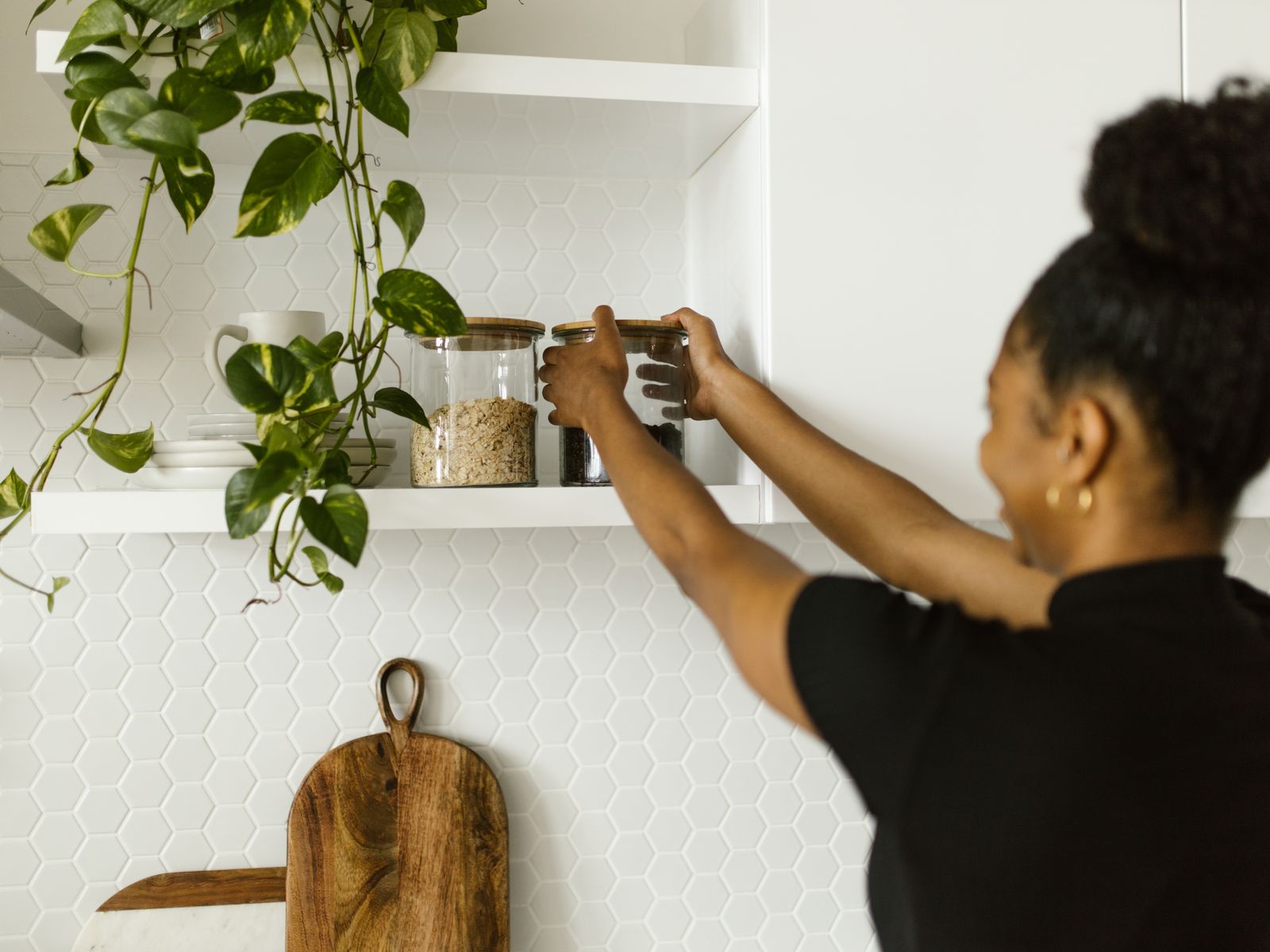
Go vertical without drilling
The walls and the air above your counters are the biggest untapped resource in small rental kitchen organization. You just have to claim that vertical space without making holes.
- Tension rods inside a cabinet create a second tier for cutting boards or lids.
- Adhesive hooks hold measuring cups, mugs, and light utensils on cabinet sides.
- Over-the-door racks add storage to the inside of cabinet and pantry doors.
- A freestanding shelf or cart parked against a wall adds a whole zone of storage.
- Stackable wire shelves double the height inside existing cabinets.
If you want to hang lightweight items, choosing the right adhesive matters. Our breakdown of command strips versus adhesive hooks explains which product holds what, so your utensils stay up and your walls stay clean.
Maximize the cabinets you have
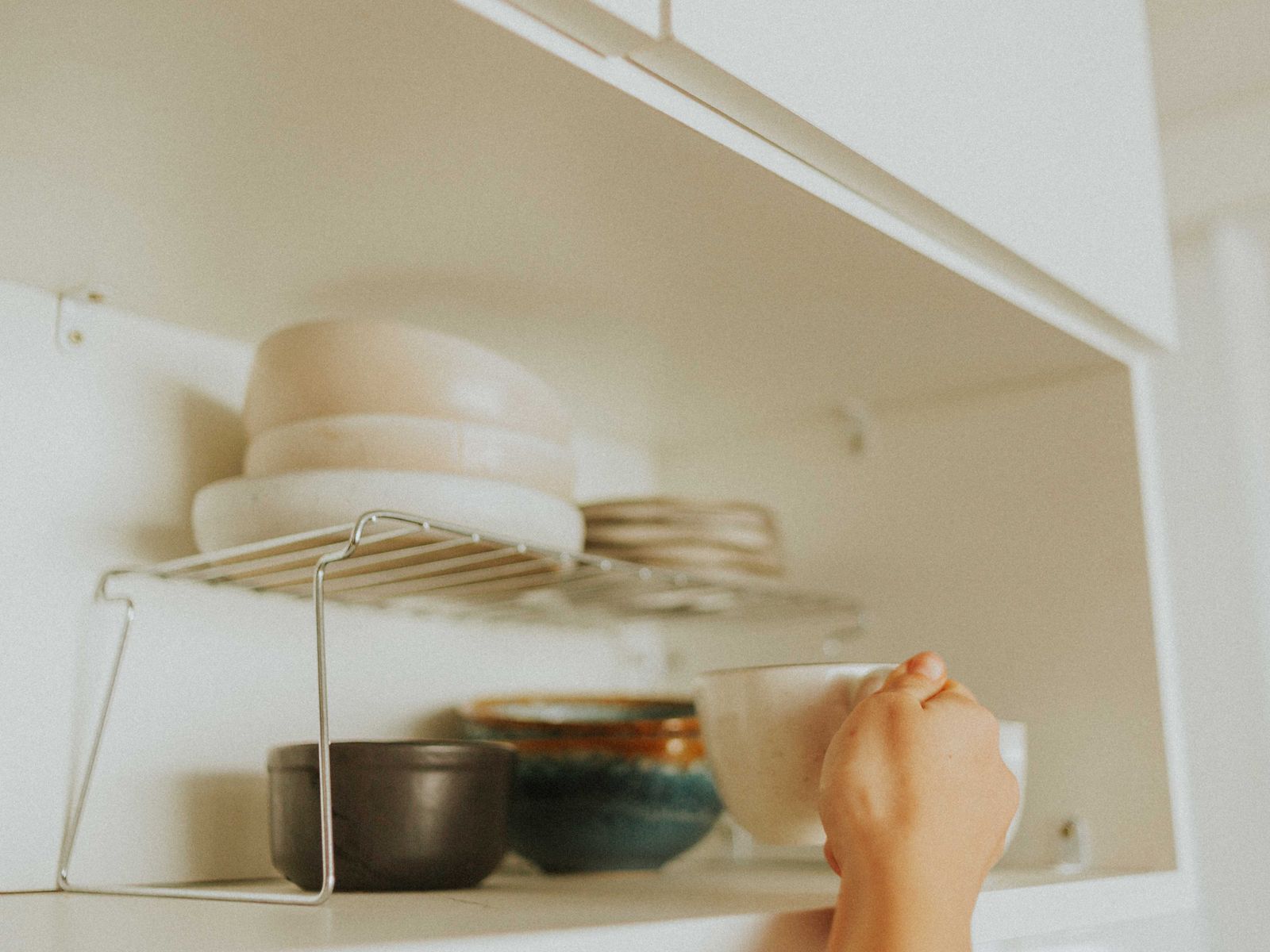
Inside the cabinet is where small rental kitchen organization quietly wins or loses. Most rental cabinets waste enormous vertical space with tall gaps between shelves and a single stack of plates swallowing a whole shelf.
Add shelf risers to create a second level, use a lazy Susan in a corner cabinet to reach the back, and store plates and bowls in vertical file-style holders where it makes sense. Group like with like so you always know where things live.
The under-sink black hole
The cabinet under the sink is prime real estate that most renters waste. A two-tier pull-out organizer that works around the pipes, plus a tension rod to hang spray bottles by their triggers, transforms this awkward space into serious storage.
Own the counter, do not bury it
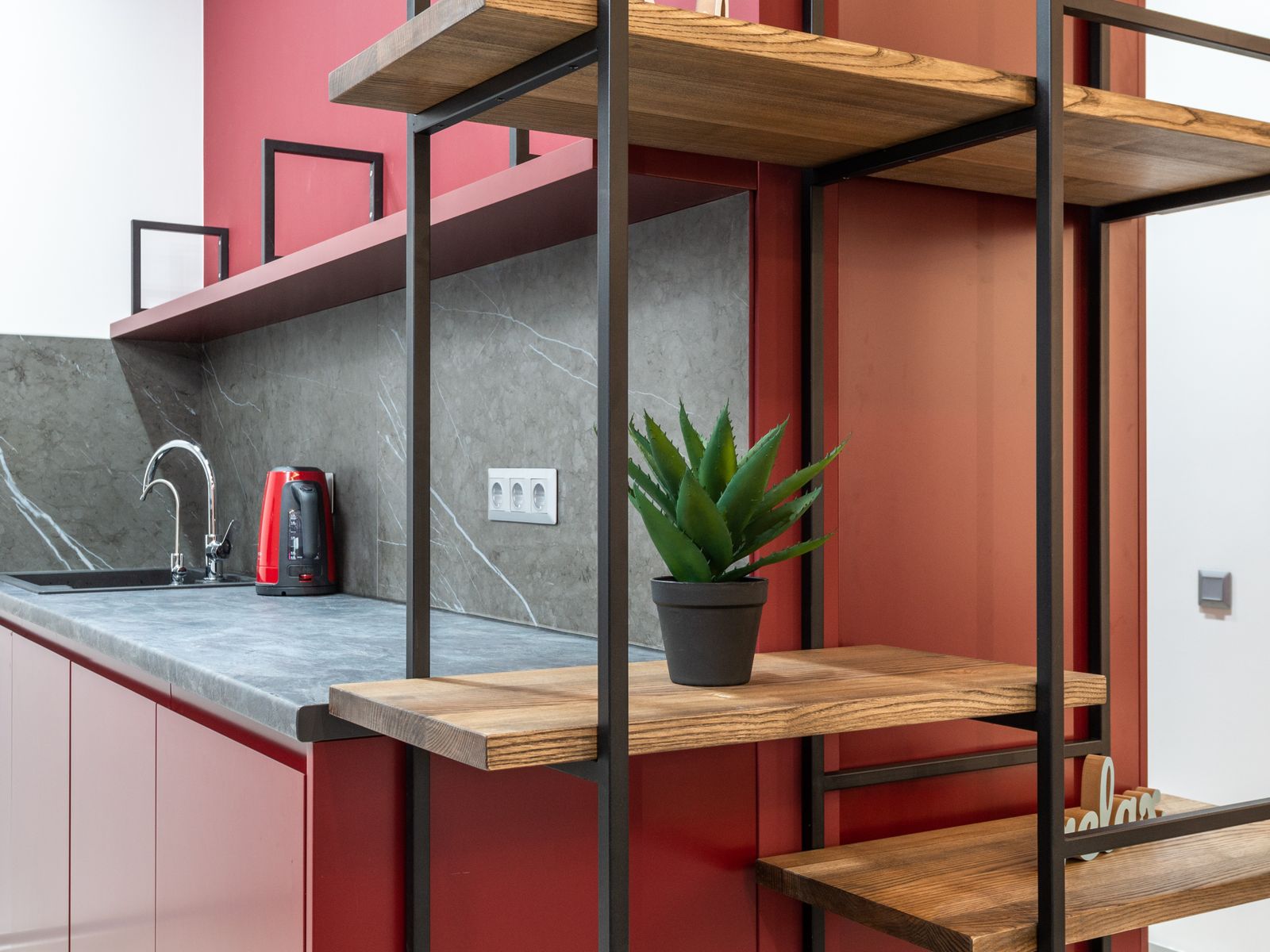
Clear counter space is the heart of a functional small kitchen, so a big part of small rental kitchen organization is getting things off the counter. A wall-mounted look without the wall damage comes from a slim freestanding shelf unit that sits on the counter or floor.
Corral daily items on a single tray so cleanup is one motion, keep only the appliances you use daily out, and store the rest. Everything visible should earn its place through frequent use.
Smart containers and labels
Uniform containers are a small rental kitchen organization secret weapon because they stack neatly and reveal exactly what you have. Decant pasta, grains, and snacks into clear canisters that fit your shelf height, and the pantry instantly looks calmer.
Labels are not just for looks; they keep a shared kitchen functional so roommates or partners return things to the right spot. A cheap label maker or even masking tape and a marker does the job on a renter budget.
What it costs and how long it takes
The beauty of small rental kitchen organization is how affordable it is. A starter kit of two tension rods, a pack of adhesive hooks, two shelf risers, and a set of containers runs roughly 40 to 80 dollars, and the whole project takes an afternoon.
If you want a bigger transformation, a freestanding rolling cart or a narrow shelving unit adds 40 to 120 dollars but delivers the most storage per dollar in a truly tiny kitchen. Everything here comes with you when you move, so it is an investment, not a sunk cost.
Zone your kitchen for how you actually cook
One idea that quietly upgrades any small rental kitchen organization plan is thinking in zones rather than in cabinets. Group everything you need for one task in one place: the coffee station near the kettle, the baking supplies together, the everyday plates and glasses within arm’s reach of the dishwasher or sink.
When items live where you use them, you stop crisscrossing a tiny room and you naturally put things back in the right spot. Zoning also makes a shared kitchen far less chaotic, because everyone learns the logic of the space in a day or two.
The daily reset habit
Even the best system falls apart without a five-minute nightly reset. Wipe the counter, return the day’s stray items to their zones, and run or empty the dish rack. In a small space, mess compounds fast, so a short daily habit keeps your organization looking effortless instead of aspirational.
Renter-safe ways to add personality
Function does not have to mean boring. Once the storage works, a few reversible touches make the kitchen feel like yours. A removable backsplash panel, a runner rug, or open shelves styled with a plant and a couple of nice jars warm up the plainest builder-grade kitchen.
If a blank wall is bringing the room down, a temporary accent can help. Our realistic guide to peel-and-stick wallpaper shows how to add pattern behind open shelves without risking your deposit, and for lightweight art you can reposition anytime, hanging pictures without drilling keeps the walls hole-free.
Mistakes that waste your money and space
The most common misstep is buying organizers before measuring. A drawer divider that does not fit or a cart too wide for the walkway is money and space wasted, so measure every gap, shelf height, and clearance before you shop. For deeper guidance on decluttering and donating what you remove, a resource like the EPA recycling and donation guide is a helpful reference.
The second mistake is organizing for a fantasy version of yourself. Build the system around how you really cook and clean, not how you wish you did, and it will actually hold up past the first busy week.
A quick word on your lease and fixtures
Before you attach anything, even damage-free, glance at your lease. Most agreements are perfectly fine with tension rods, adhesive hooks, and freestanding furniture, but a few restrict what you can affix to cabinets or walls, and rules around alterations vary by state, city, and the specific lease you signed.
When in doubt, stick to freestanding and tension-based solutions that leave no trace at all, and keep the packaging for anything adhesive so you can test removal on a hidden spot first. A quick photo of each cabinet and drawer before you start also gives you a clean baseline to compare against at move-out, which is the simplest insurance for your deposit that exists.
Conclusion: a bigger kitchen without moving
You do not need a renovation or a landlord favor to cook comfortably. Thoughtful small rental kitchen organization uses vertical space, reclaims wasted cabinet volume, and keeps counters clear, all without a single screw or a whisper of damage.
Your next step: pick the one spot that frustrates you most, whether that is the under-sink chaos or the buried counter, and fix only that this weekend. One solved zone builds the momentum to organize the rest.

Luiza Ferraz writes about making rental spaces feel like home. Based in Minneapolis, Minnesota, she shares practical, damage-free upgrades, smart organization hacks, and proven ways to protect your security deposit. Her goal is to help renters create beautiful homes without ever picking up a drill.