You open your apartment door and you are just… in it. No mudroom, no foyer, no helpful little nook to catch your keys and shoes. Just a wall, maybe a light switch, and the sinking realization that your jacket is about to live on the back of a dining chair again.
The good news is that entryway organization has almost nothing to do with having an actual entryway. It is about carving out a “landing zone” from whatever few square feet you have by the door, using vertical space and renter-safe pieces. Here is how to build one even when your floor plan insists you cannot.
Before you buy anything, spend two minutes watching how you actually use the space. Where do you naturally drop your keys? Which shoes get kicked off first? Building your entryway organization around your real habits, rather than a magazine ideal, is the difference between a system you use and one you abandon after a week. The best setup is the one that matches what you already do, just with a designated spot for each of those moves.
Why Entryway Organization Matters (Even Without an Entryway)
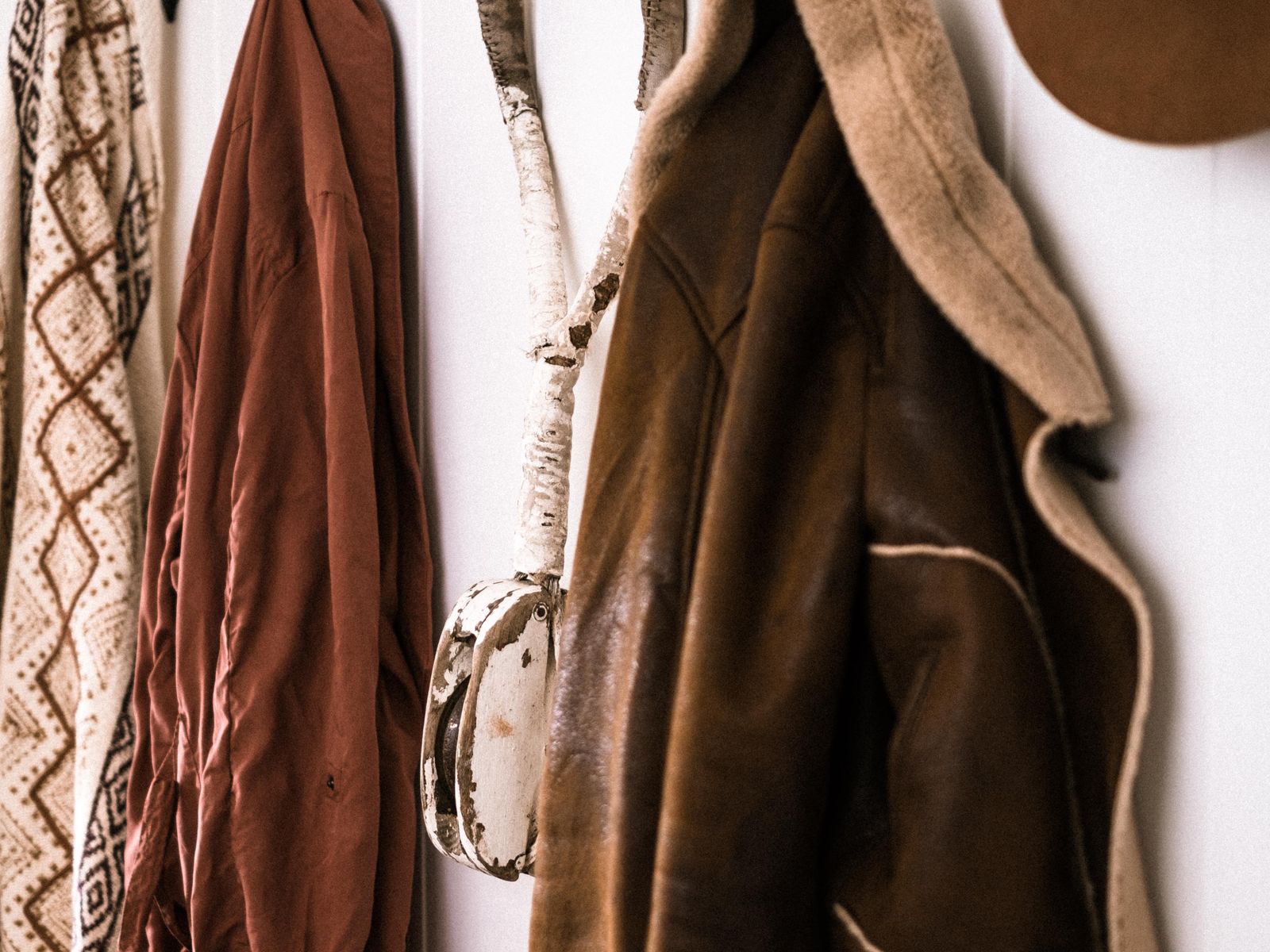
That first and last three feet of your home set the tone for everything. When keys, mail, shoes, and bags have a designated spot, you stop losing them and the whole apartment feels calmer. When they do not, clutter spreads inward from the door like a slow tide.
Good entryway organization also protects your deposit indirectly: fewer things dumped on the floor means less scuffing, fewer wet shoes on the same worn patch, and a tidier space at move-out. The same vertical-thinking mindset powers our guide to organizing a rental closet you cannot renovate.
There is also a psychological payoff worth naming. Coming home to a clear, functional entry, even a tiny one, gives you a small daily sense of control that a cluttered doorway quietly erodes. In a rental you cannot renovate, these little wins matter more, because they are the parts of the home you actually get to shape.
Go Vertical: Your Walls Are the Entryway
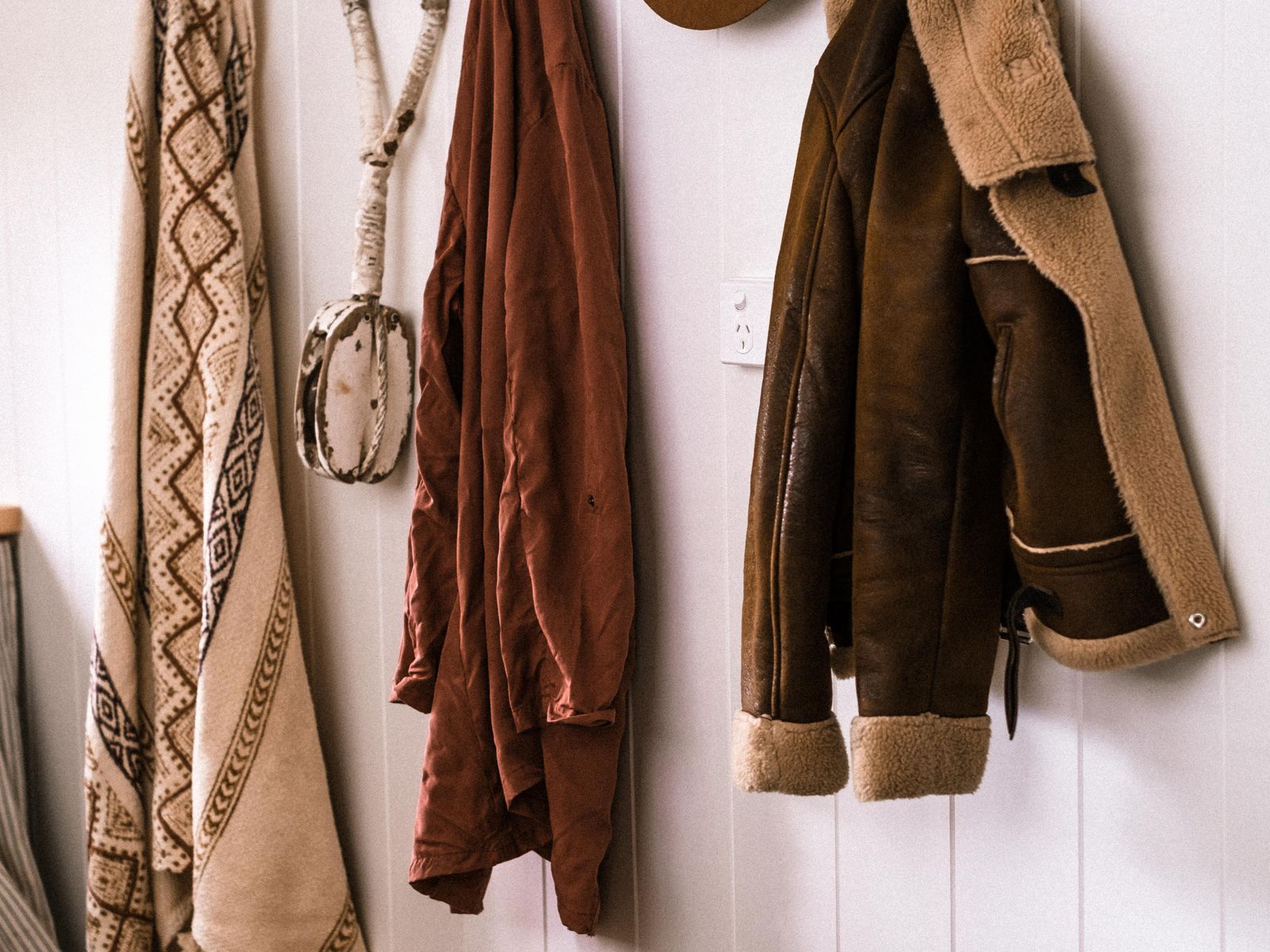
When you have no floor space, the wall beside the door becomes your best friend. The goal is to get everyday items up and off the ground without drilling.
Damage-free hooks and rails
A row of adhesive hooks or a peel-and-stick rail turns bare wall into a coat-and-bag station in minutes. Match the hook’s weight rating to the load: light hooks for keys and masks, heavier-duty ones for coats and backpacks. To be sure they hold, our comparison of command strips versus adhesive hooks breaks down what actually stays up.
A small caution: adhesive products can occasionally lift paint on removal, and what a landlord may charge for varies by state, city, and lease. Press firmly, follow the removal instructions (usually pulling the tab straight down), and test in a low-visibility spot first.
A mirror does double duty
Hang a lightweight mirror near the door using heavy-duty adhesive strips rated for its weight. It gives you a last-look spot before you leave and, just as importantly, bounces light around to make a dim or windowless entry feel twice as open. In small apartments, a mirror is one of the highest-impact, lowest-cost additions you can make.
Add a Slim Landing Zone
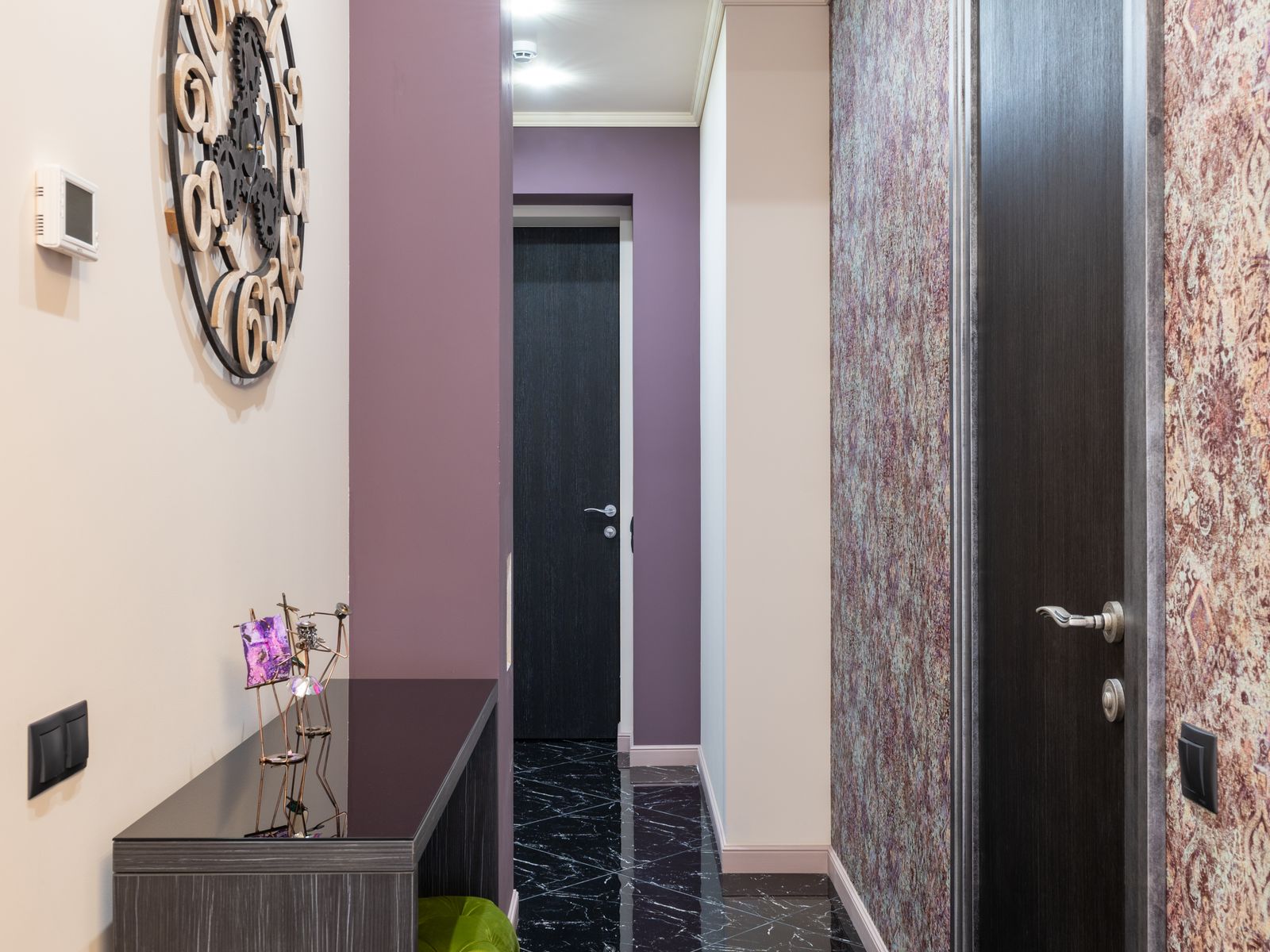
If you have even ten inches of depth to spare, a slim piece of furniture transforms the space. The trick is choosing something narrow enough not to block the walkway.
- A narrow shoe bench gives you a seat to tie laces and a spot to corral shoes underneath.
- A slim console or wall-mounted shelf holds a key dish, mail tray, and a small lamp.
- An over-the-door organizer adds pockets for gloves, sunglasses, and pet leashes with zero floor footprint.
- A floating shelf with hooks underneath doubles your storage in one piece.
- A basket or lidded bin tucks under the console for shoes or seasonal gear.
Keep the palette calm and the pieces low-profile. In a no-entryway apartment, restraint reads as intentional, while too much furniture reads as clutter.
Budget-wise, a functional entry is one of the cheapest upgrades in the whole apartment. A pack of sturdy adhesive hooks runs about $8 to $15, a slim shoe bench $30 to $60, and a small tray or bowl just a few dollars. For well under a hundred dollars, you can solve a daily annoyance that has probably bothered you since the day you moved in, and take every piece with you to the next place.
The Catch-All System That Prevents Chaos
The real secret to lasting entryway organization is a simple rule: everything that comes through the door has one home. A single tray for keys and wallet, one hook per person for bags, and one bin for shoes covers ninety percent of daily clutter.
Add a small tray or bowl for the odds and ends (loose change, receipts, the occasional bolt you found on the floor) so they do not migrate to your kitchen counter. If mail is your weakness, a two-slot sorter labeled “act on” and “file” keeps the pile from taking over, a habit that pairs well with broader small-space organization throughout the apartment.
Think about the flow of a typical arrival: you come in with hands full, and every extra second it takes to put something down is a second you will skip when you are tired. That is why the best systems are almost lazy-proof, with open hooks and open trays rather than lids and drawers. The easier it is to put something in its place, the more likely it actually lands there.
Small-Space Entryway Ideas by Layout
The door-opens-into-the-living-room apartment
Define the zone visually with a small rug and a wall-mounted shelf-plus-hooks combo. The rug signals “this is the entry” even though the room keeps going, and it catches grit before it travels across your floors.
The narrow-hallway apartment
Go fully vertical and shallow: a slim wall shelf, a mirror to bounce light, and hooks at staggered heights so coats do not collide. Avoid anything that reduces the walkway width, which can feel cramped and even be a trip hazard.
The studio apartment
In a studio, the door often opens straight into your whole life, so keep the entry zone extremely compact: a couple of hooks, a wall pocket for mail, and a shoe tray are usually enough. Resist the urge to add furniture that competes with the rest of your carefully arranged space; here, vertical and minimal always wins.
Whatever pieces you choose, keep move-out in mind from day one. Favor freestanding furniture and removable hooks over anything that needs an anchor, note your landlord’s rules on wall fixtures, and keep the original packaging for adhesive products so you know exactly how to remove them cleanly. Rules on what counts as damage vary by state, city, and lease, so when in doubt, check yours and your local tenant resources, such as HUD’s tenant rights resources, before committing to anything that touches the wall.
If you share the apartment, give each person their own hook and their own small bin or tray. Shared systems fall apart fastest at the entry, because that is where everyone is rushing in and out. Personal zones remove the “whose stuff is this” friction and make it obvious where each coat, set of keys, and pair of shoes belongs, which keeps the whole system running without anyone having to nag.
The Bottom Line
A missing entryway is a design problem, not a life sentence. With vertical hooks, one slim landing piece, and a strict “one home for everything” rule, you can build entryway organization that keeps keys findable and jackets off the dining chair, all without a single hole in the wall.
Your next step: this week, pick the wall right beside your door and add just two things, a set of hooks and a small tray. Live with it for a few days, then add a bench or shelf only if you still need more. The door zone will start working for you almost immediately.

Luiza Ferraz writes about making rental spaces feel like home. Based in Minneapolis, Minnesota, she shares practical, damage-free upgrades, smart organization hacks, and proven ways to protect your security deposit. Her goal is to help renters create beautiful homes without ever picking up a drill.