You are standing in the middle of your current place with a tape measure in one hand and the new floor plan in the other, and the math is not working. The sectional will not fit. The bookshelf that holds your whole life is six inches too wide for the only wall it could go on. The new apartment is charming and cheaper, but it is also, undeniably, smaller, and now you have to downsize when moving into it.
Moving into less space feels daunting, but it is one of the smartest money moves a renter can make. The key is to downsize when moving with a plan, not in a last-minute panic the night before the truck arrives. Do it well and you land in your new place lighter, calmer, and with lower rent for years.
Start before you pack a single box
The biggest mistake is packing everything, moving it, and sorting later. You pay to transport things you will throw away, and you fill your small new place with clutter on day one. The better sequence is to decide what leaves before anything gets boxed.
Begin four to six weeks out. Walk each room with three labels in mind: keep, sell or donate, and toss. When you downsize when moving this early, you give yourself time to actually sell the valuable pieces rather than dumping them for free in the final scramble. For the packing itself, our guide on the complete apartment moving checklist lays out an eight-week runway.
There is a mindset shift that makes all of this easier. You are not losing your things; you are choosing which things earn a spot in a home you can actually afford. Framing it as an upgrade to your finances and your daily calm, rather than a sacrifice, turns the sorting from a chore into something almost satisfying by the end.

Measure the new space first
Guessing is how you end up with a couch stuck in a stairwell. Get the new floor plan or measure on a viewing, and note the width of doorways and the turn at the top of any stairs, which is where big furniture actually gets stuck.
Make a simple fit list
Measure your largest pieces, the bed, sofa, table, dresser and shelving, and check each against the new rooms and the path to get them there. Anything that does not fit or cannot make the turn goes on the sell list now, while you still have weeks to move it. This single step prevents the most expensive downsizing mistakes.
Do not forget the invisible storage in your current place: the back of the closet, the space under the bed, the top shelf you have not touched since you moved in. Those are the zones that quietly hoard the most, and they are the easiest to clear because you already live fine without seeing what is in them. Empty those first for a fast, motivating early win.
How to downsize when moving: deciding what stays
When everything feels essential, use rules instead of feelings. A few that work well:
- The 12-month rule: if you have not used it in a year and it is not seasonal, it probably goes.
- The duplicate rule: keep one good version of a thing, not three mediocre ones.
- The replacement test: if losing it would cost under $20 and a quick trip to replace, you do not need to move it.
- The one-in category cap: decide how many mugs, towels or books the new space allows, then keep only your favorites up to that number.
Work in short sessions rather than marathon days. Decision fatigue is real, and after an hour or two of sorting, everything starts to feel either precious or worthless, neither of which leads to good choices. Tackling one category or one closet per evening keeps your judgment sharp and the project from swallowing an entire exhausting weekend.

Be honest about sentimental items, but contain them. Give yourself one box for keepsakes; when it is full, you make choices. Photograph things you want to remember but do not need to own, so the memory survives even when the object does not.
Keep the new floor plan taped to your fridge during the whole process. Every time you waver on whether to keep something, a glance at the smaller layout answers the question for you. Making the constraint visible is one of the simplest tricks for staying honest when you downsize when moving, because the wall space, not your optimism, gets the final vote.
Sell, donate, and recoup some cash
Downsizing can actually pay for part of your move. Furniture in good shape sells quickly on local marketplaces; price to move, not to maximize, since you have a deadline. Books, clothes and kitchenware move faster as donations, and many charities will pick up larger items for free.
Keep a simple record of donations. Depending on where you live and your tax situation, donated goods may be deductible, but rules vary, so check current IRS guidance or a tax professional before assuming anything. The point of a receipt is to keep the option open.
Set a realistic price and a floor you will not go below, then let go of the rest. Renters often overvalue used furniture because they remember what they paid; buyers only see a used item competing with a hundred others. If a piece has not sold by a week before the move, drop the price sharply or switch it to the donation pile rather than paying to haul it to a smaller home with no room for it.
Watch out for the free-stuff trap, too. Neighbors and coworkers will happily offer you their old items during a move, and it is tempting to say yes to a “perfectly good” lamp or chair. In a downsizing move, the answer is almost always no. Every incoming object undoes a decision you just worked hard to make.
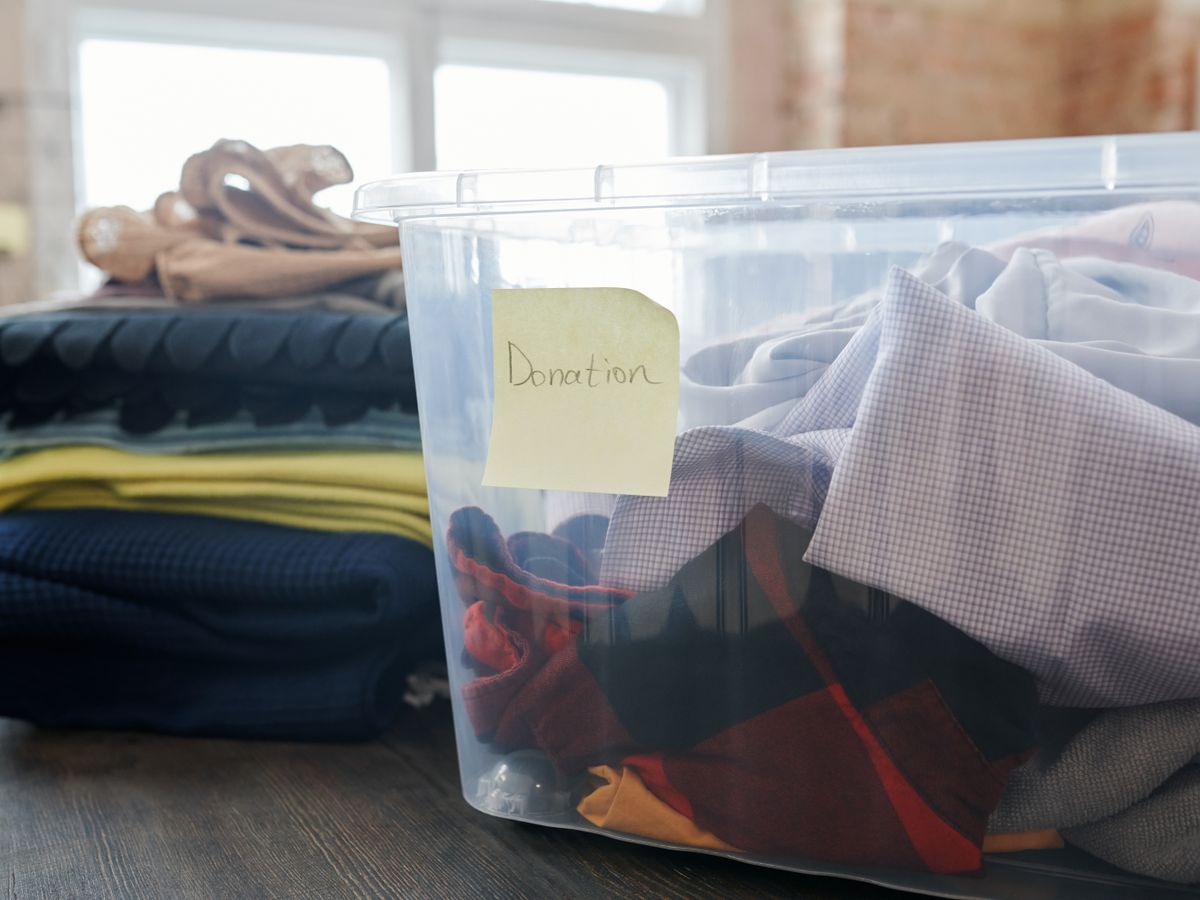
Time your selling and donating so you are not living among labeled piles for a month. Aim to have the sell items listed two to three weeks out and a donation pickup booked for the week before the move. That way the discards leave the house in an orderly wave instead of all landing on moving day, when you have zero time and even less patience to deal with them.
Pack the survivors smartly
Once the pile is smaller, packing is faster and cheaper. Fewer boxes means fewer supplies, and you can often move in a single trip. If you are trying to keep costs down, our guide on moving with minimal boxes and free packing materials pairs perfectly with a downsizing move.
Label boxes by room in the new place, not the old one, and mark a handful as open first, the things you need the first night. Arriving with less stuff and a clear system is what makes a small apartment feel spacious instead of stuffed from the start.
Budget a little for the move itself even though you are trying to save. A downsizing move can cost less than a normal one because there is less to carry, but you may still want a couple of hours of hired help for the heavy, awkward pieces that have to make tight turns. Spending forty dollars to avoid a gouged wall or a strained back is money well spent, especially when a damaged wall could cost you part of your deposit. If you hire movers, the federal Protect Your Move resource explains your rights and how to avoid moving scams.
Set up the small space to feel big
The work does not end at the door. In a smaller apartment, storage and layout do the heavy lifting. Use vertical space, choose furniture that doubles as storage, and resist the urge to fill every corner. If storage is genuinely scarce, our guide on how to organize a rental with zero storage space is built for exactly this situation.
Give it a few weeks. A downsized home almost always feels tight at first and then, once systems settle, feels freeing. When you downsize when moving on purpose rather than by accident, you are not just fitting into a smaller footprint; you are choosing a lighter, cheaper, easier way to live.

Luiza Ferraz writes about making rental spaces feel like home. Based in Minneapolis, Minnesota, she shares practical, damage-free upgrades, smart organization hacks, and proven ways to protect your security deposit. Her goal is to help renters create beautiful homes without ever picking up a drill.