There is a specific kind of standoff that happens in a shared rental: two people, one bathroom counter, and a silent negotiation over whose toothbrush gets the good spot. Add a couple’s worth of shoes by a single tiny door, and suddenly the apartment feels three sizes smaller than the square footage promised.
The fix is rarely more space; it is smarter systems. When you learn how to share a small rental well, the goal is to give every person and every category of stuff a clear home, all with reversible solutions that keep your deposit safe.
Start with a conversation, not a container
Before you buy a single bin, talk through how you both actually live. Who cooks, who works from home, who needs quiet and when: these answers shape the layout far more than any product.
Agree on shared zones and personal zones out loud. Knowing that the left side of the closet is yours and the right is theirs removes the daily friction that makes a small shared space feel tense. A five-minute chat up front saves countless silent standoffs later.
Divide storage fairly when you share a small rental
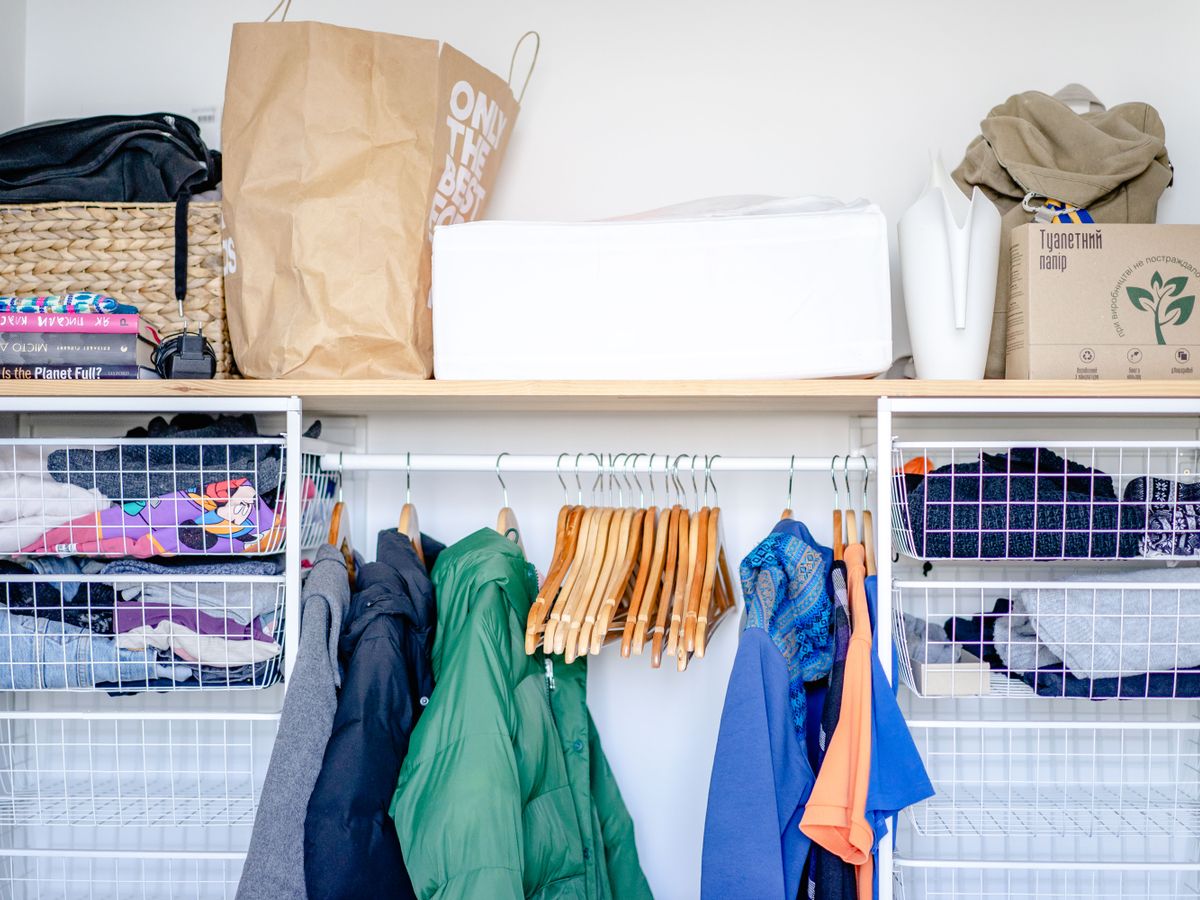
Fair does not always mean equal; it means clear. Split closets, cabinets, and shelves so each person knows exactly what is theirs, then keep shared items in the most accessible middle ground.
Simple ways to split a shared closet
A tension rod adds a second hanging level for around $15, effectively doubling closet capacity for shorter items. Stackable drawers and labeled bins give each person a clearly owned zone without any hardware.
Color-coded hangers are a tiny trick with a big payoff. When one person uses white and the other uses wood, the shared rod stays organized on its own.
Zone the shared rooms so they work twice as hard
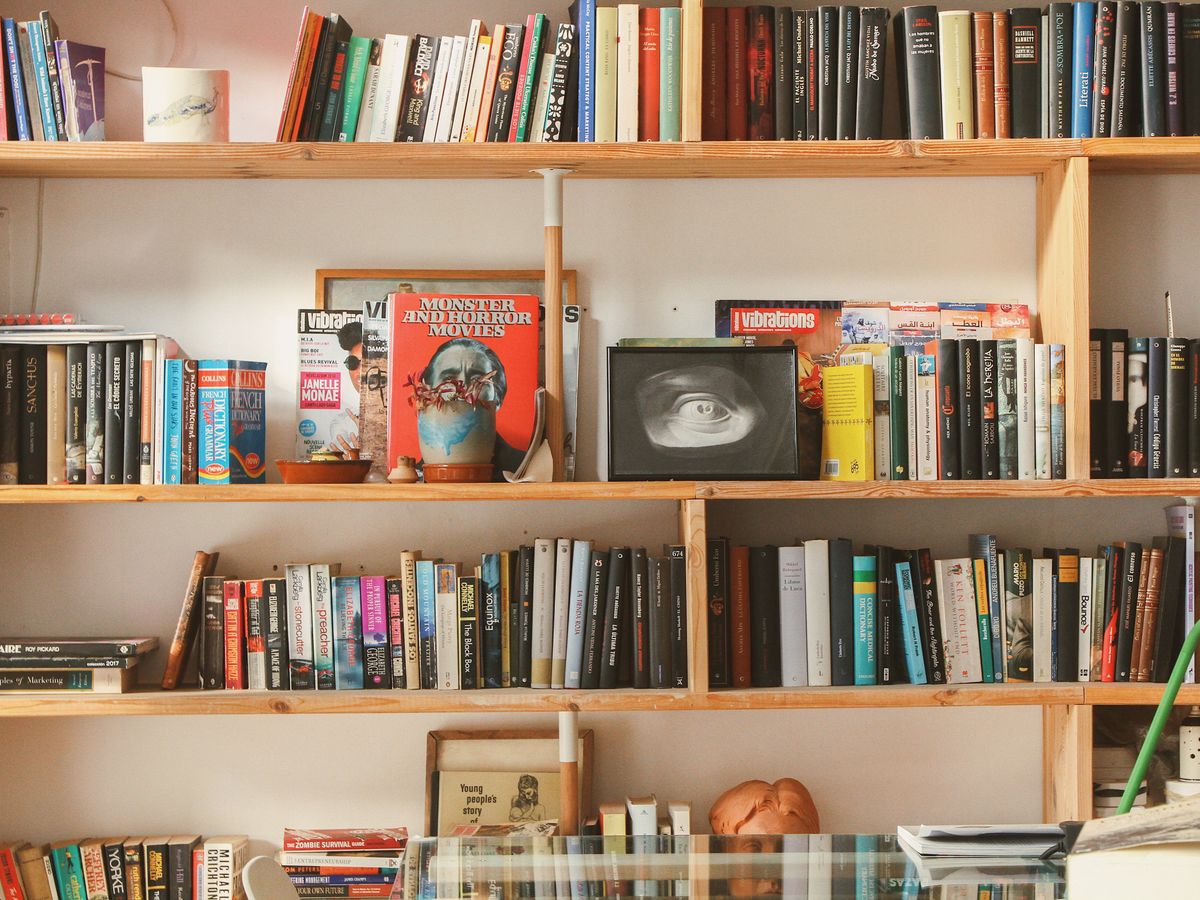
In a small shared rental, most rooms need to do double duty. A living room might also be a home office and a guest space, so define zones with rugs and furniture rather than walls.
- Use a bookshelf or open shelving unit as a freestanding room divider
- Define a work nook with a small desk and a rug so it feels separate
- Give each person a personal drop zone by the door with an adhesive hook and a basket
- Add a tension-rod curtain to screen off a bed in a studio setup
- Choose a storage ottoman that works as a seat, a table, and a hidden bin
Freestanding pieces are the renter’s secret weapon here because they divide space without touching a wall. Our roundup of freestanding furniture that solves rental storage problems is full of dividers that pull double duty.
Tame the two biggest battlegrounds: kitchen and bathroom
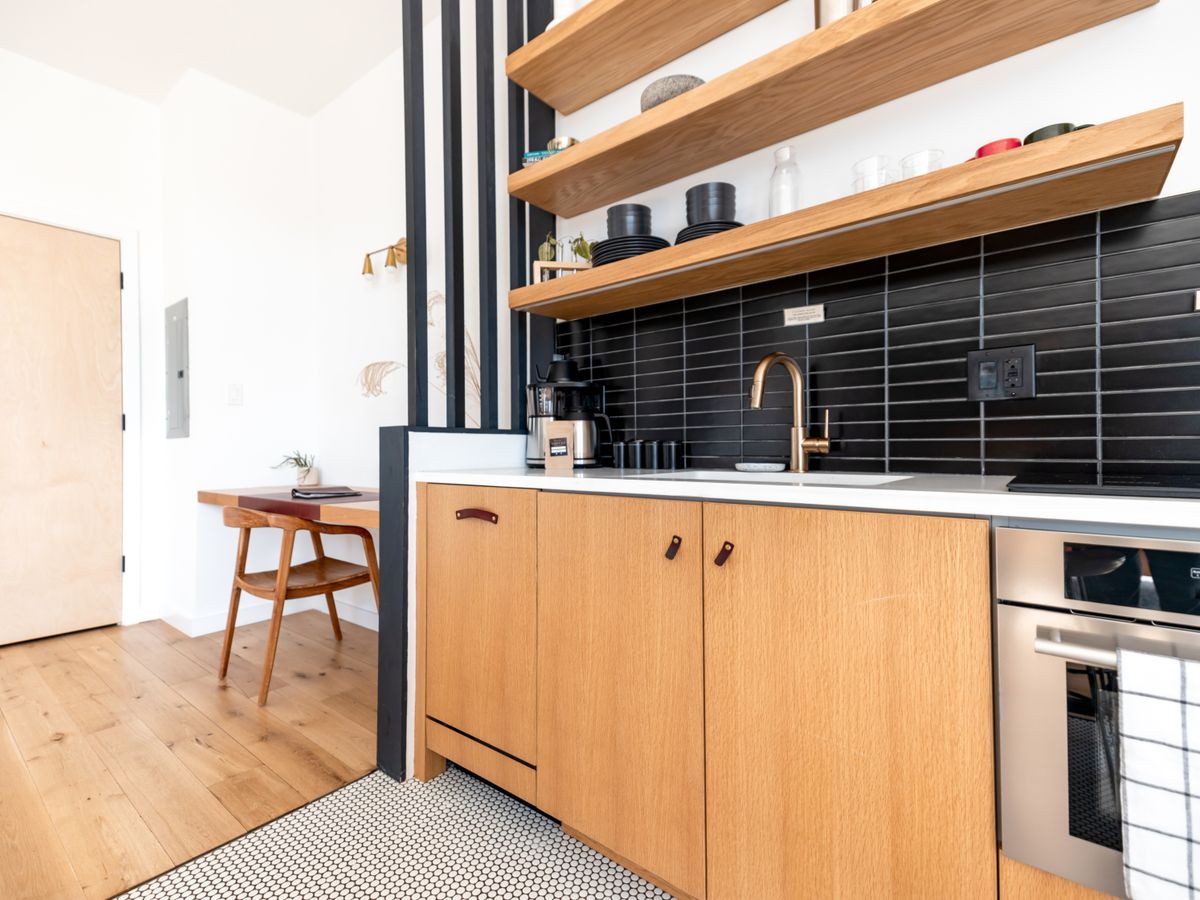
The kitchen and bathroom cause the most friction because everyone uses them daily and space is tight. Give each person a designated shelf or drawer, and keep only shared essentials in the prime real estate.
In the bathroom, stackable cups or small caddies keep toiletries separated and portable. In the kitchen, a labeled shelf per person in the fridge and pantry prevents the classic did-you-eat-my-leftovers argument.
When storage runs truly thin, go vertical and reversible. Ideas from our guide to organizing a rental with zero storage space apply directly to a shared unit where every inch counts.
Make small spaces feel bigger for two
When two people share tight square footage, visual tricks matter as much as storage. A few reversible choices can make a shared rental feel noticeably more open without any construction.
Lean a large freestanding mirror against one wall to bounce light and double the sense of space. Keep the color palette calm and consistent across both people’s belongings, since visual clutter shrinks a room faster than physical clutter.
Choose furniture with legs you can see under, like a sofa or bed frame raised off the floor. That sliver of visible floor reads as more room, and the under-bed area becomes prime shared storage for out-of-season clothes. Flat rolling bins slide underneath and keep that space usable without any permanent change to the room.
Handle noise, schedules, and privacy
Physical organization solves half the problem; the other half is time and sound. Two people on different schedules need small buffers to keep a shared rental peaceful.
Create pockets of privacy
A tension-rod curtain, a tall bookshelf, or even a folding screen can carve out a semi-private corner in a studio or open layout. It gives each person somewhere to retreat without anyone needing a second bedroom.
Soft materials also tame noise. Rugs, curtains, and upholstered pieces absorb sound, so an early riser and a night owl can coexist without every footstep echoing through a hard-surfaced apartment.
Agree on quiet hours and headphone habits early. These tiny understandings prevent the low-grade resentment that builds when two people share a small rental for months on end.
Budget-friendly shopping strategy
Outfitting a shared space does not have to be expensive. Split the cost of shared items like a room divider or an ottoman, and let each person buy their own personal organizers so ownership stays clear.
A workable starter budget of $100 to $250 covers tension rods, a few bins, extra hangers, and one flexible divider. Secondhand shelving and marketplace finds stretch that budget further and keep the setup fully reversible.
Common mistakes couples and roommates make
The most common mistake is merging everything into one undivided pile of shared stuff. Without clear personal zones, small annoyances compound until the apartment feels like a source of stress rather than a home.
Another slip is buying storage before decluttering. Two people’s worth of duplicate gadgets, mismatched mugs, and spare cables eat space fast, so pare down together before you spend on bins you may not need.
Finally, avoid anything that damages walls in a shared unit. Since a deposit is usually split, a single set of screw holes can cost both people, so keep every solution adhesive, tension-based, or freestanding. It is the simplest way to protect both your friendship and your money.
Revisit your systems every couple of months as life changes. A setup that worked when you moved in may need tweaking once routines settle, and adjusting together keeps a shared small rental running smoothly.
Protect harmony (and your deposit)
Shared living works best with a few light-touch agreements. A simple cleaning rotation and a shared calendar for guests prevent most roommate conflicts before they start.
Keep everything damage-free so no one is on the hook at move-out. Adhesive hooks, tension rods, and freestanding units all leave walls untouched, which matters when a deposit is split between people.
If you are on a shared lease, understand that responsibility for damage and rent is often joint, and the specifics vary by state, city, and your lease. Read the agreement together and check local tenant resources so everyone knows where they stand.
Where to learn more about shared leases
Roommate and co-tenant rules differ widely from place to place. For a neutral starting point on tenant rights and shared-tenancy basics, the HUD tenant rights resource is a helpful reference before you sign anything together.
It also helps to get the setup right from day one. Pairing these systems with our guide to setting up the first 48 hours of a new rental means you start shared life organized instead of scrambling.
Your next step
Pick the single most contested spot in your home, whether that is the bathroom counter or the entry, and give each person a clearly owned zone there this week. One solved battleground makes the rest feel possible. Momentum in a shared home is contagious, and small wins tend to inspire both people to keep the systems going.
With clear zones, reversible dividers, and a couple of simple agreements, you can share a small rental without stepping on each other, and hand it back at move-out exactly as you found it.

Luiza Ferraz writes about making rental spaces feel like home. Based in Minneapolis, Minnesota, she shares practical, damage-free upgrades, smart organization hacks, and proven ways to protect your security deposit. Her goal is to help renters create beautiful homes without ever picking up a drill.