Your lease says no holes, your walls are plaster that laughs at adhesive, and yet you are drowning in stuff with nowhere to put it. The advice online always seems to assume you can just screw a shelf into the wall, which is exactly the thing you cannot do.
Good news: some of the smartest vertical storage ideas never touch the walls at all. By building upward with freestanding pieces, carts, and over-the-door systems, renters can multiply their storage without a single anchor, screw, or strip of adhesive. Here are the ones that actually work in a small rental.
Why Wall-Free Vertical Storage Ideas Work for Renters

Floor space is finite, but the air above it is wide open. Most apartments waste the vertical foot or two near the ceiling entirely. Going up instead of out is how small spaces gain storage without feeling more crowded.
The beauty of wall-free vertical storage ideas is that they carry zero deposit risk: nothing is attached, so nothing can leave a mark. That makes them the perfect partner to reversible projects like learning to install shelves without drilling, and a natural extension of organizing a rental closet you cannot renovate.
One gentle caution: tall freestanding furniture can tip, which is a genuine safety issue, especially around children or pets. Many pieces include an anti-tip strap meant to anchor to a wall; if your lease forbids that small screw, weight the base heavily and place the unit where a fall would be least dangerous, and check your lease and local tenant resources, such as HUD’s tenant rights resources, if you are unsure what fixtures are allowed.
There is a design bonus here too. Vertical elements naturally draw the eye upward, which tricks a cramped room into feeling taller and airier. A tall, slim shelf in a corner does more for the sense of space than a low, sprawling console that eats the floor, even when the two hold the same amount of stuff.
Freestanding Shelves and Etageres
The workhorse of wall-free vertical storage is a tall, narrow freestanding shelf. A slim bookcase, a ladder shelf, or an open etagere adds five or six shelves of storage while occupying barely a square foot of floor.
Choose narrow and tall
Look for units taller than they are wide; they store more per square foot of floor and draw the eye upward, which makes ceilings feel higher. Place heavier items on the lower shelves for stability and reserve the top for light, decorative pieces.
Cost-wise, these solutions span a wide range, so there is something for every budget. A basic three-tier rolling cart runs about $20 to $40, a slim freestanding bookshelf $40 to $120, an over-the-door organizer $10 to $30, and a standing garment rack $25 to $70. Because everything is furniture rather than a fixture, you can buy pieces one at a time as your budget allows and take them all to your next apartment.
Rolling Carts and Mobile Storage
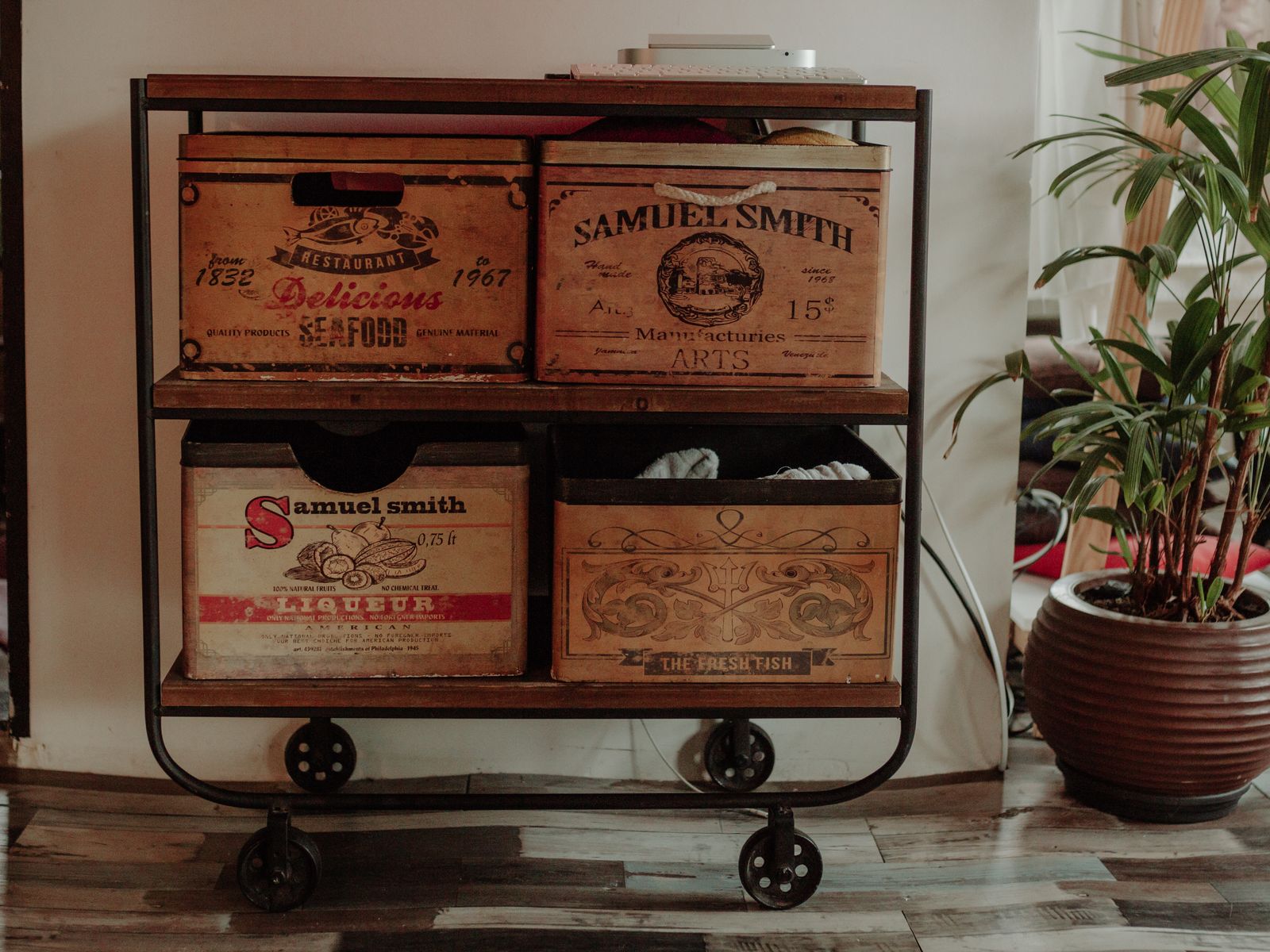
A three-tier rolling cart is one of the most flexible vertical storage ideas ever made. It tucks into a gap beside the fridge, rolls out when you need it, and moves room to room as your needs change, from kitchen pantry to bathroom caddy to craft station.
Because it is mobile and freestanding, a cart adds vertical storage anywhere without commitment. Look for one with a locking wheel or two so it stays put when loaded, and keep the top tier for things you reach for daily.
Use vertical space inside cabinets too
Wall-free thinking applies inside your existing storage as well. Shelf risers double the usable height of a cabinet or closet shelf, stackable bins build upward inside a pantry, and a tension rod can create a second tier in a cupboard. These small additions cost only a few dollars each yet reclaim a surprising amount of the empty air trapped inside cabinets you already have.
It helps to audit what you actually need to store before choosing a piece. Open shelving suits things you want on display or grab constantly, like books, plants, and everyday dishes. Closed bins and door-back organizers are better for the clutter you would rather hide, such as cleaning supplies and off-season gear. Matching the storage type to the contents keeps a vertical unit looking intentional instead of becoming one more surface to pile things on.
Over-the-Door and Freestanding Hooks

Doors are vertical real estate you already own. Over-the-door organizers hook right over the top edge and add pockets or shelves on the back of any door, ideal for shoes, cleaning supplies, pantry goods, or accessories.
Freestanding coat racks and hall trees do the same job for jackets and bags without touching a wall. For deeper needs, a standing garment rack turns an empty corner into an open closet. None of these leave a trace when you leave.
When you shop, measure first and resist buying the biggest unit you can find. In a small rental, a piece that is too deep or too wide creates the very crowding you were trying to solve. The goal of good vertical storage ideas is to reclaim air, not to trade floor clutter for bulky furniture, so slim and tall almost always beats large and imposing.
Safety deserves one more mention, because it is the single most important part of going vertical. Always load a freestanding unit from the bottom up, keeping the heaviest items lowest so the center of gravity stays near the floor. In homes with young children or energetic pets, treat any tall piece as something that could be climbed or pulled, and either secure it or choose a shorter, wider unit instead. No amount of reclaimed storage is worth a tipping hazard.
Vertical Storage Ideas by Room
Different rooms reward different wall-free solutions. Here is where each type shines.
- Kitchen: a rolling cart for produce and small appliances, plus a freestanding shelf for overflow dishes.
- Bathroom: an over-the-toilet freestanding shelf (it straddles the tank, touching nothing) and an over-the-door caddy.
- Bedroom: a tall narrow bookcase and a standing garment rack for a wall-free “closet.”
- Living room: a ladder shelf or etagere for books, plants, and display.
- Entry: a hall tree or freestanding coat rack for bags and jackets.
Mix two or three of these and even a tiny apartment gains a surprising amount of order.
Renters who move often get an extra payoff from this approach. Freestanding pieces disassemble or roll straight onto the truck, so you are not leaving behind money spent on built-ins or spending your last day patching anchor holes. A modular set of shelves and carts becomes a portable storage system you rebuild in each new place, which quietly saves both money and move-out stress over several leases.
Finally, give your vertical storage a quick edit every few months. Because these pieces make it so easy to stack more upward, they can quietly fill with things you no longer use. A seasonal pass to donate or toss what has gone stale keeps your hard-won space working, and stops your clever solution from slowly turning back into clutter that simply happens to be taller.
If you are short on both floor and wall space, prioritize dual-purpose pieces. A storage ottoman that also seats a guest, a rolling cart that serves as a mobile nightstand, or a ladder shelf that displays plants while holding books all earn their footprint twice over. In the tightest rentals, every item you own should ideally do more than one job, and vertical furniture is often the easiest place to start looking for that kind of efficiency.
The Bottom Line
You do not need permission, a drill, or a single hole to store more in your rental. Between freestanding shelves, rolling carts, and over-the-door systems, these vertical storage ideas build upward using furniture and doors instead of walls, so everything comes with you and nothing risks your deposit.
Your next step: look up. Find the emptiest vertical space in your most cluttered room, measure the footprint you can spare on the floor, and choose one tall, narrow piece to fill it. You will free up more room than you expect from that single change, and if you ever do want wall-mounted options, our guide to installing shelves without drilling covers the reversible ones.

Luiza Ferraz writes about making rental spaces feel like home. Based in Minneapolis, Minnesota, she shares practical, damage-free upgrades, smart organization hacks, and proven ways to protect your security deposit. Her goal is to help renters create beautiful homes without ever picking up a drill.